

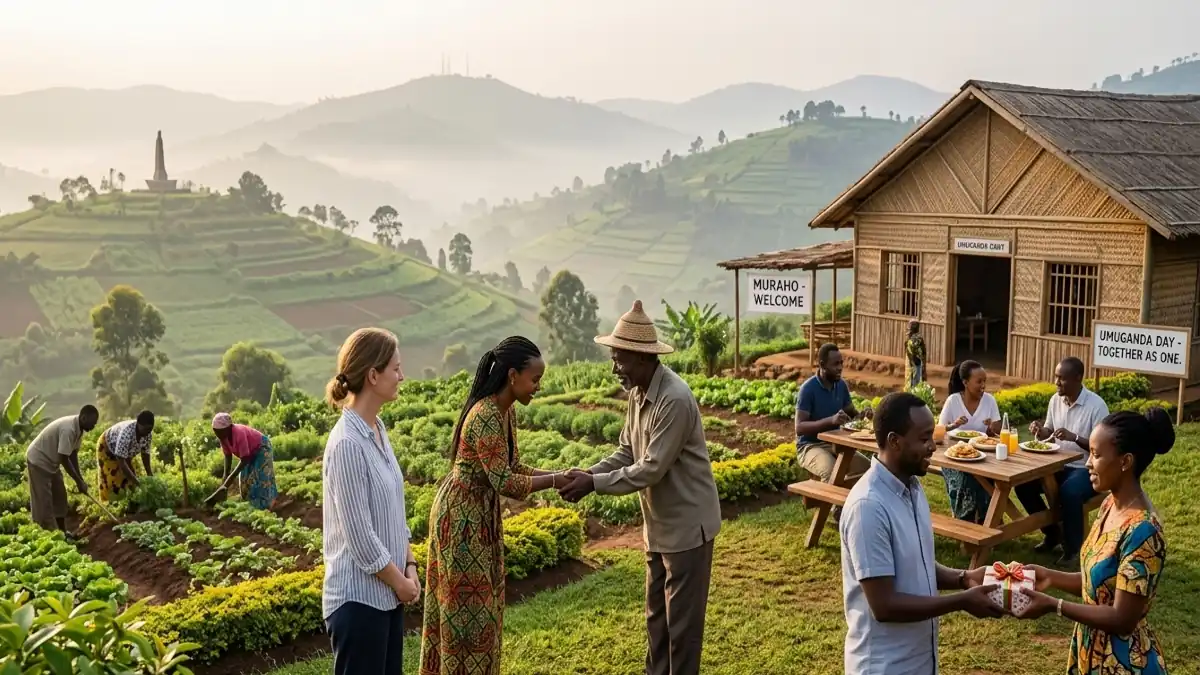
Rwanda is often called the “Land of a Thousand Hills,” but it could just as easily be known for its deep-rooted culture of grace and mutual respect. For any newcomer, the key to a smooth transition isn’t just learning the geography—it’s understanding the subtle social rhythms that govern daily life. From the way you greet a neighbor to the silence in a conversation, these nuances are the threads that weave the country’s strong social fabric.
Navigating Social Nuances in Rwanda
Rwandan social interaction is built on a foundation of dignity (agaciro) and community. While the city of Kigali is modern and fast-paced, traditional values of formality and collective responsibility remain at the heart of every interaction.
Respect, Formality, and Public Presence
Respect for elders and authority is paramount. Greetings are never rushed; a firm handshake accompanied by a sincere inquiry into one’s well-being is the standard. In professional or formal settings, always use titles like “Mr.” or “Madam.” Additionally, Rwandans tend to be modest in public—both in dress and behavior. Public displays of affection are rare, and maintaining a composed, polite demeanor is highly valued.
The Art of Indirect Communication
Communication here is often a delicate dance. Unlike the blunt directness found in many Western cultures, Rwandan communication is nuanced and diplomatic. Public criticism is avoided at all costs to save face; if you have a disagreement, it is best handled quietly and privately. Pay close attention to non-verbal cues and remember that silence is often a sign of thoughtful consideration rather than an absence of opinion.
Embrace the spirit of Umuganda, the monthly nationwide community service day. It is the clearest local expression of the “collective identity” that defines life in Rwanda.
Dining and Gift-Giving Etiquette
If you are invited to a home, presenting a small, wrapped gift with both hands is a sign of great respect. During the meal, wait for the eldest or the host to be served first. While forks and knives are standard, don’t be surprised if you need to specifically request a spoon. Finishing the food on your plate is considered a compliment to the cook and a sign that you enjoyed the hospitality.
Resilience and Sensitivity
Rwanda’s history is a significant part of its identity, marked by a profound journey of reconciliation and unity. It is important to approach this history with extreme sensitivity. Focus on the country’s incredible progress and resilience, and avoid making uninformed or casual comments about the past. Showing a genuine interest in the national language, Kinyarwanda, by learning basics like “Muraho” (Hello), will always be met with warmth.
New to the City?
From mastering Umuganda to setting up your SIM card and MoMo, read our comprehensive guide for your first 24 hours in Kigali.