

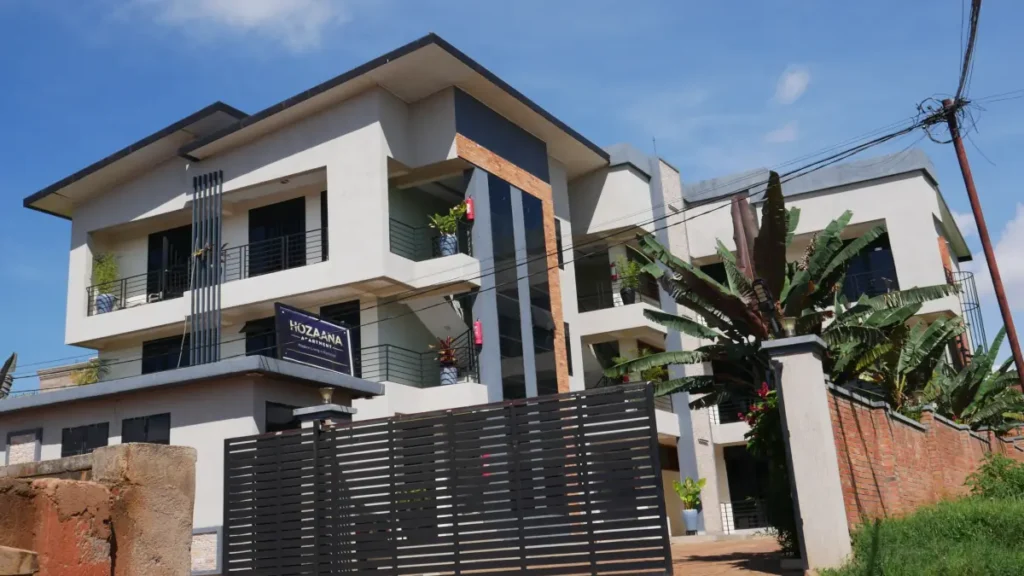
Kigali is a city in constant motion. While the main boulevards are famously polished, the residential areas offer a different, more organic perspective. Here, Residential Architecture is a fascinating blend of high-end modern design and traditional roots, often existing side-by-side on the same street.
Key Observation: You will see new houses and construction sites appearing every single day. The city is expanding so quickly that what was a vacant field last month may be a multi-story apartment today.
The Neighborhood Mix: Old Meets New
One of the most striking things about Kigali is the “Urban In-filling.” Because the city was once largely rural, you will often see a sleek, modern apartment building standing directly next to a small, traditional rural-style house made of mud-plaster.
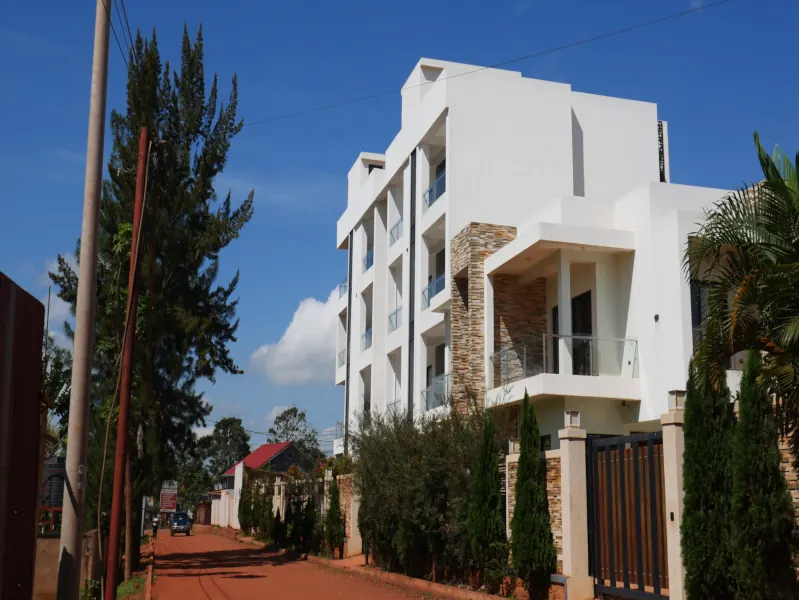
A modern multi-story residential building in Kanombe, an example of the new vertical growth occurring in previously rural areas.

A traditional rural-style house, often found sitting right next to newer developments.
This happens because people buy older, smaller plots of land to build new, taller homes. In these areas, it is common to find vacant land used for small-scale gardening right next to a construction site, along with small neighborhood shops that serve the local residents with basic supplies.

Small neighborhood boutiques or shops are a staple of residential streets, providing daily essentials to the local community.

Vacant land located near active construction sites, showing the rapid in-filling as the city expands.

A view of the pristine and well-established streets of Kiyovu, representing the peak of Kigali’s modern residential development.
The Anatomy of a Kigali Home
Most homes in the city are designed for privacy and self-sufficiency. There are a few features you will see in almost every compound:
- Boundary Stones: Large, heavy volcanic stones are often stacked at the base of compound walls or used to secure borders. These are essential for stabilizing the soil and preventing erosion on Kigali’s hills.

Heavy volcanic stones used as boundary stones to secure property edges and stabilize the red dirt roads.
- The Black Water Tank: A universal sight is the large black plastic water tank on the roof or behind a wall. Because water flow from city pipes can be inconsistent, these tanks are a necessity to ensure a home has water for showers and kitchens 24/7.

The essential black water storage tank, found on nearly every property to ensure a 24/7 water supply.
- Security Walls: High perimeter walls are standard. Newer homes often have clean painted finishes or decorative brickwork topped with security features.
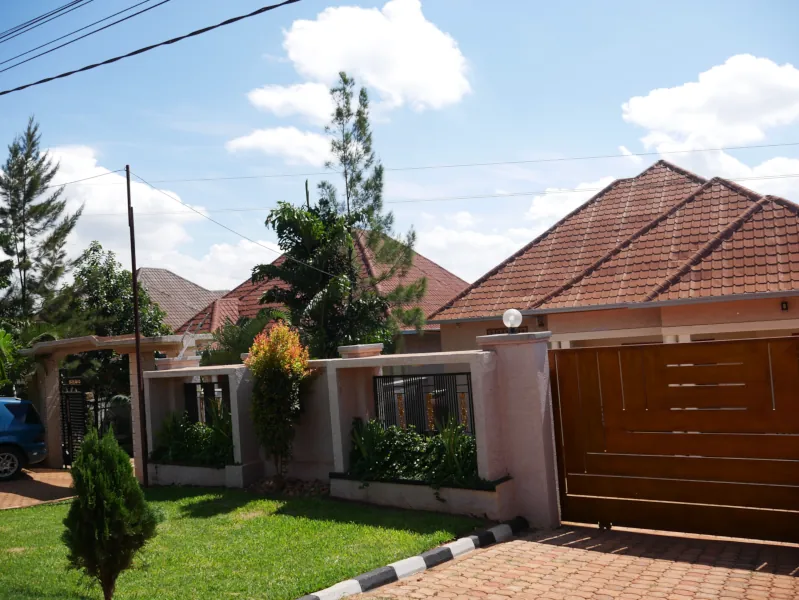
A typical painted compound wall topped with security features, which is the standard for privacy in residential sectors.

Barbed wire fencing is a common security feature on compound walls in many residential neighborhoods.
- Electricity Meters: Most homes use a “Cash Power” system. You will typically find a REG meter mounted on the exterior back wall of the house or in a utility area behind the building. This is where you enter your 20-digit electricity tokens, which are usually purchased via Mobile Money.
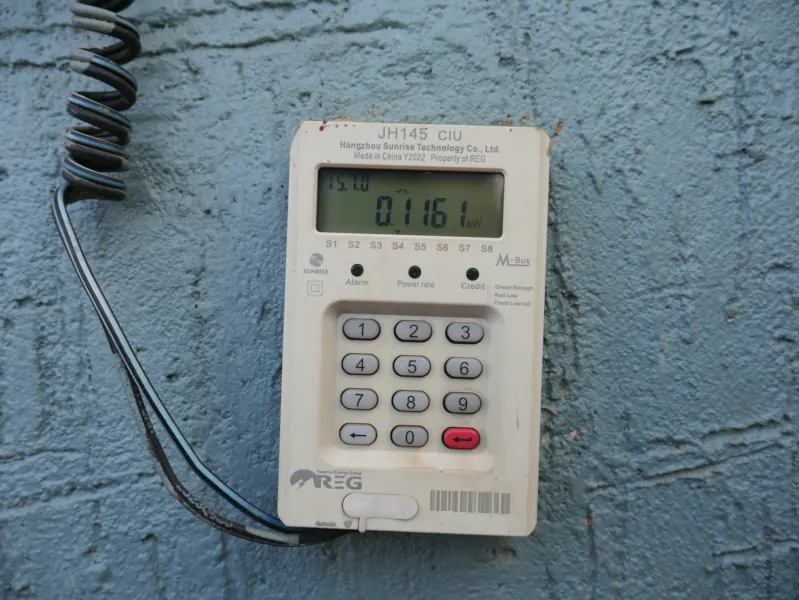
A standard REG (Rwanda Energy Group) prepaid meter found in most homes, where residents enter 20-digit tokens to top up their electricity.
The Reality of Residential Roads
Once you leave the paved main roads, the condition of the street can change instantly. Most residential streets are made of Laterite—a packed red-orange dirt.

A neighborhood street made of packed red dirt (laterite), common in areas that are still transitioning from rural to urban.
These roads are often inconsistent. While some are smooth, many are filled with “dents” and deep mud holes. These holes are usually caused by heavy seasonal rains washing away the soil or the weight of construction trucks moving through the neighborhood.
Vehicle Advice: If you are planning to buy or rent a car, it is wise to choose an elevated SUV or a vehicle that sits high. These roads often have hidden rocks and steep “ramps” where the dirt road meets the paved main road. A small sedan can easily take damage to its underside in these transition areas.

The inconsistent condition of residential roads, where rain and traffic often create deep dents and mud holes.
A City Under Construction
Construction is the background noise of Kigali. New houses are built using locally fired bricks, and sites are easily identified by a “forest” of wooden eucalyptus poles used as scaffolding.
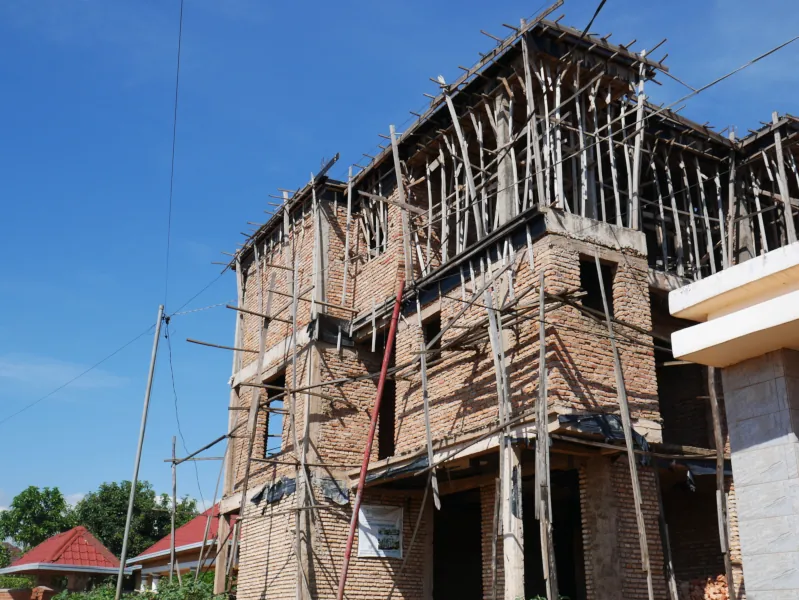
Scaffolding made of eucalyptus poles is the standard for building projects, allowing for manual construction on steep hills.
This handmade approach allows development to happen even on steep slopes where heavy machinery cannot go. It is a sign of a city that is rapidly building its future while still using the materials and methods that have worked for generations.
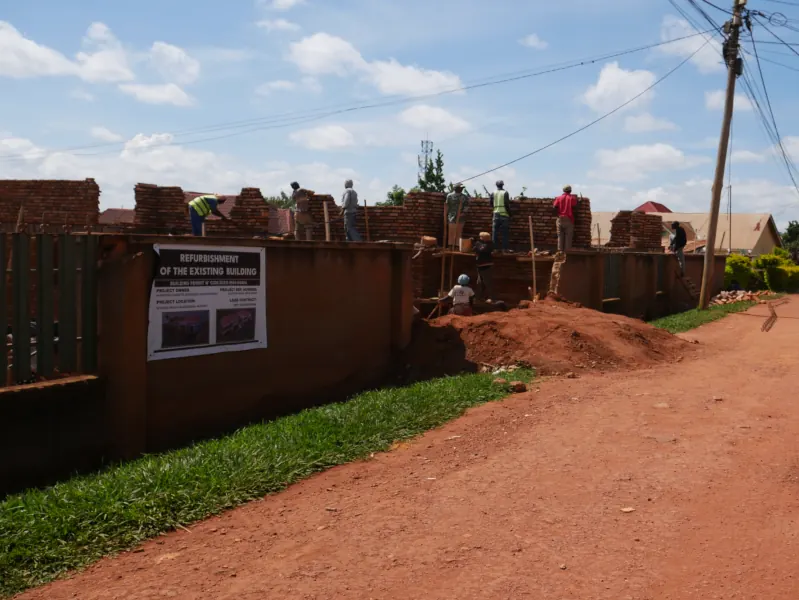
An active construction site showing the foundational masonry work of a new residential development.
New to the City?
From mastering Umuganda to setting up your SIM card and MoMo, read our comprehensive guide for your first 24 hours in Kigali.