

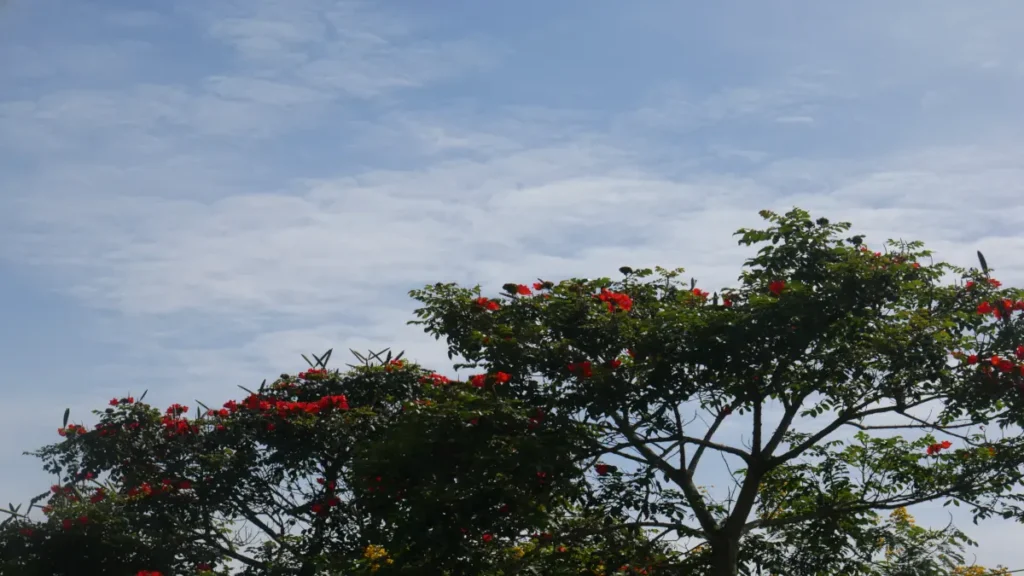
While Kigali is often seen as having an “eternal spring,” residents know that the reality is more nuanced. The climate is defined by altitude and a tropical cycle that demands preparation.
Kigali’s Climate
Living in Kigali requires more than just an appreciation for the hills. Because the city experiences unique microclimates and seasonal shifts, being prepared for sudden changes is a part of daily life. The following sections outline the practical realities of the weather you will encounter.
The “Rainy Season”
While there are designated wet and dry months, it can—and often does—rain at any time of the year. Kigali is a city of microclimates, and sudden downpours are common.
The Golden Rule: A compact, backpack-sized umbrella is the most valuable accessory you can own. If you’re caught in an afternoon shower, you won’t just get wet; you’ll get soaked.
That “Red Dust”
You will notice a fine, reddish-brown dust coating your shoes, your clothes, and your vehicle. This is not industrial pollution—it is laterite, the iron-oxide-rich soil that covers Rwanda’s hills.
Why it matters: This dust is highly hygroscopic (it absorbs moisture). When it settles on your car or bike during the dry season and then gets hit by rain, it creates a grimy, slightly conductive layer that can accelerate corrosion on metal and electrical components. Regular washing is a necessity, not a luxury, to keep your equipment in good working order.

Laterite dust: Kigali’s red soil doesn’t just coat your shoes—it finds its way deep into your engine.
The Evening Chill
Despite the warm days, it can get surprisingly cold at night, particularly immediately after a heavy rain. The temperature drop can be significant due to the city’s high altitude.
The Fix: Keep a light jacket or a warm sweater handy. If you’re heading out for dinner or drinks, don’t assume the daytime temperature will hold through the night.
Managing Mosquitoes
Mosquitoes are present year-round, especially near standing water, ponds, or lakes. While Kigali’s altitude keeps the risk lower than in lower-lying tropical regions, they are still a nuisance and a health consideration.
The Local Solution: Most residents use electric mosquito repellent plug-ins (often called Igikoresho kirukana imibu). They are inexpensive, easy to find in local shops, and far more effective than sprays for indoor living areas.

A local household essential: electric repellent plug-ins are the most effective way to keep mosquitoes at bay.
Always carry an umbrella, even a small backpack-sized one, as sudden rain can occur in any season regardless of weather forecasts.
The Seasonal Swarms
A unique and often surprising marker of the changing seasons in Rwanda is the emergence of flying termites (known locally as Iswa). These insects are drawn to bright artificial lights after a heavy downpour. Within a few hours, they shed their wings and fall to the ground, leaving behind remnants at front entrances and tiled floors. It is important to note that you won’t see these every time it rains; however, during the peak transitions into the rainy seasons—typically around October and April—they emerge in massive numbers.
Insider Tip: When a swarm starts, keep your windows and doors tightly closed and turn off external lights. If you don’t, they will be drawn inside toward your indoor lighting.
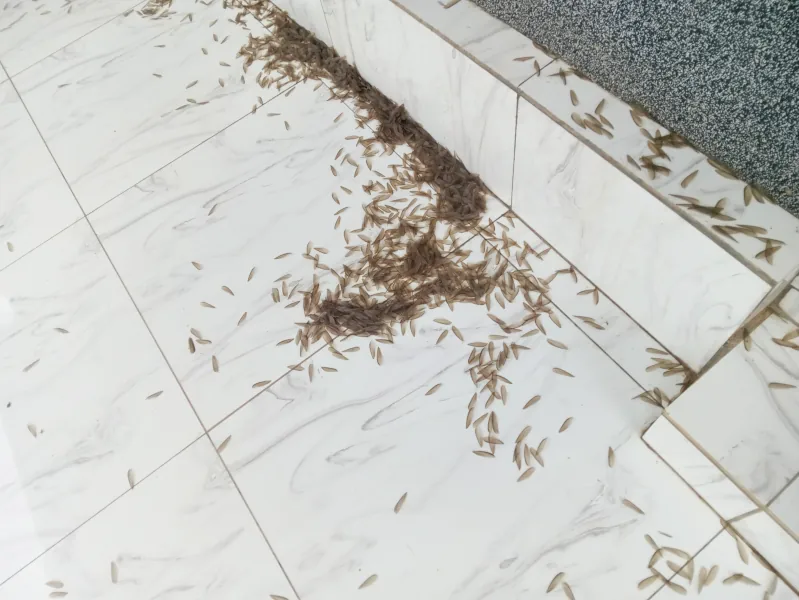
It is common to find piles of wings and remnants on tiled floors and at front entrances following a heavy seasonal rain.
Your Practical Tips
- Dress in Layers: Because the temperature can shift from “hot sun” to “cool rain” to “chilly evening” within a single day, layering is your best strategy.
- Protect Your Gear: If you have sensitive electronics or documents, keep them in a water-resistant bag. Kigali’s sudden rainstorms can overwhelm even standard “water-resistant” backpacks.
- Maintain Your Vehicle: If you own a car, keep an eye on your air filters and electrical connections. That red laterite dust has a way of finding its way into every crevice, and the moisture from the rain only makes the cleanup harder.
New to the City?
From mastering Umuganda to setting up your SIM card and MoMo, read our comprehensive guide for your first 24 hours in Kigali.