

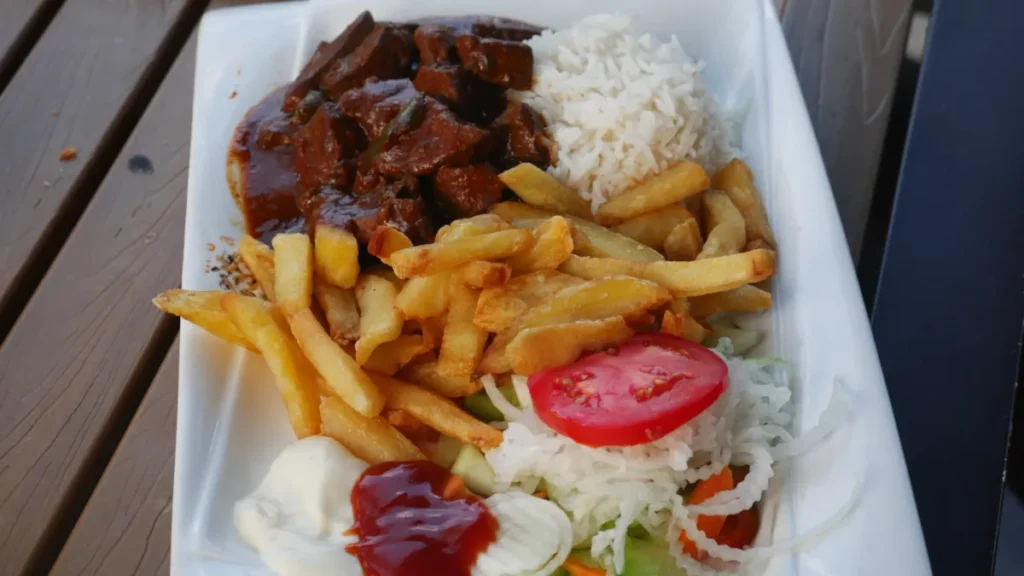
Exploring local food is one of the most exciting parts of moving to a new country. However, broad expectations built on stereotypical African culinary traditions can lead to surprise when arriving in Rwanda. Understanding local dining habits will help you adjust quickly and appreciate the unique, earthy nature of traditional Rwandan cuisine.
Rwandan Food & Dining Culture
Unlike many neighboring regions famous for heavy spices and fiery peppers, traditional Rwandan food is defined by simple, wholesome, and earthy staples. Rather than relying on bold seasoning, local dishes focus on fresh, locally harvested ingredients cooked plainly to retain their natural flavors.
Staples Over Spice: The Daily Table
There is no single “national dish” in Rwanda, but rather a staple mix of carbohydrates and legumes served at almost every meal. A typical home-cooked family dinner consists of rice (pilau), beans, fries (chips), boiled green plantains or figs, dodo (amaranth leaves), isombe (cassava leaves) and ugali (a stiff cornmeal porridge). Meals are heavily focused on natural ingredients, seasoned simply with tomatoes, onions, and salt. Rwandans generally prefer their foods boiled as opposed to fried.
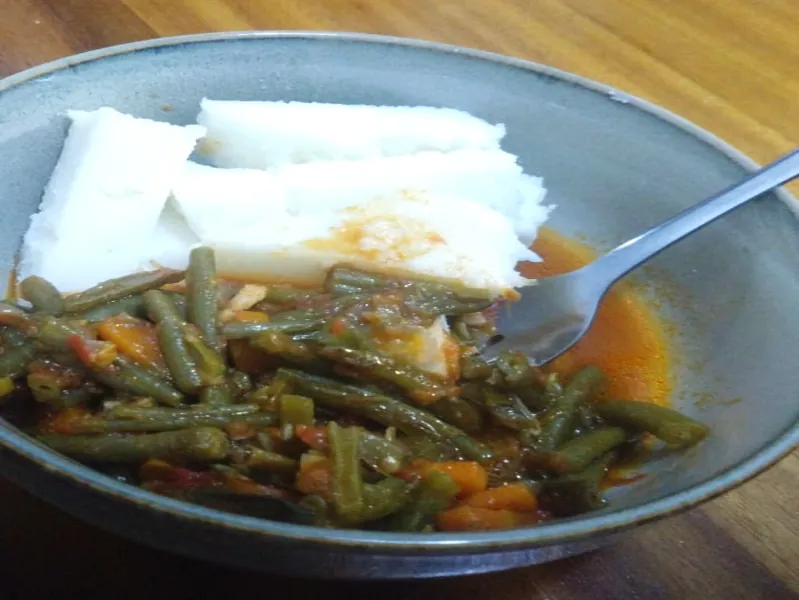
A typical, simple home-cooked meal featuring stiff ugali paired with a light tomato and green bean stew.
Classic Dishes: Agatogo and Collabo
When locals prepare a stew, Agatogo is a prominent staple—a hearty dish made with plantains, potatoes, or cassava simmered in a light tomato-based sauce. Another slightly unconventional home-style meal is known as “Collabo,” a mixed stew combining green bananas, yams, potatoes and vegetables cooked together into a savory, tomato-based broth.
Meat as a Delicacy
Traditional Rwandan diets are predominantly meat-free. While Rwandans enjoy eating meat, it is considered a special luxury rather than an everyday ingredient. When meat is served, beef is the most common, frequently served in stews or grilled as local goat or beef brochettes (skewers). Chicken, goat, and fresh fish from Lake Kivu are also enjoyed, though usually reserved for dining out or special family gatherings.
Expecting spicy food? If you are looking for fiery spices or heavy seasoning, local Rwandan food may taste mild or plain. Keep hot pepper sauce (like Akabanga) on hand to add heat to any local meal.
Craving Variety? Kigali’s Dining Scene
- International Variety: Kigali features a thriving international restaurant scene offering high-quality Italian, Chinese, Arabian, American (burgers, fried chicken, and shakes) and more.
- Regional Flavors: If you want bold African spices, you can easily find authentic Nigerian, West African, and Kenyan restaurants across the city.
- Local Buffets: For a budget-friendly lunch, try a traditional Rwandan “Mélange” (buffet), where you can sample rice, beans, plantains, and stews all on one plate.
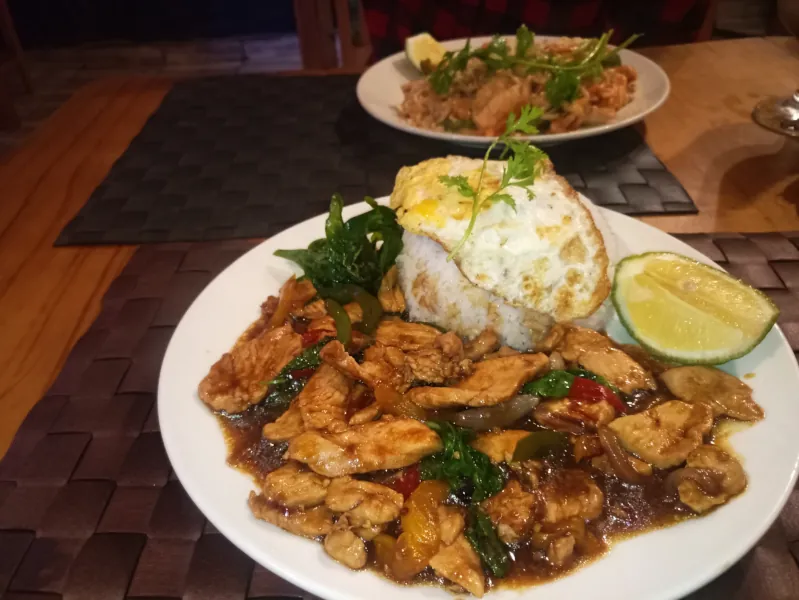
A plate of Thai stir-fried chicken with basil, green peppers, and onions, served over white rice with a fried egg and a lime wedge.
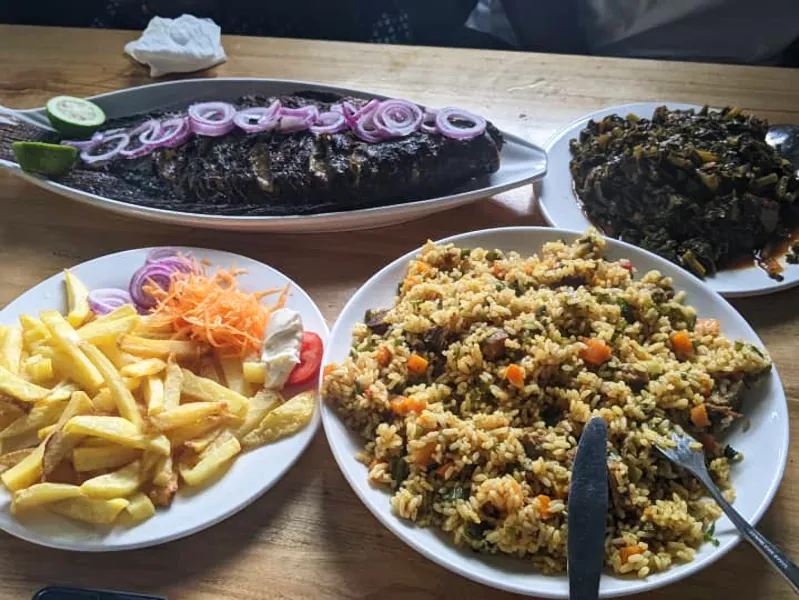
A Congolese-style grilled tilapia feast served with chips, pilau, and cassava leaves, popular in Kigali’s cross-border dining spots.
Pro Tip for Newcomers: When dining at traditional local restaurants, meals are often cooked completely fresh to order. Expect relaxed service times, or order in advance if you are on a tight schedule.
New to the City?
From mastering Umuganda to setting up your SIM card and MoMo, read our comprehensive guide for your first 24 hours in Kigali.